
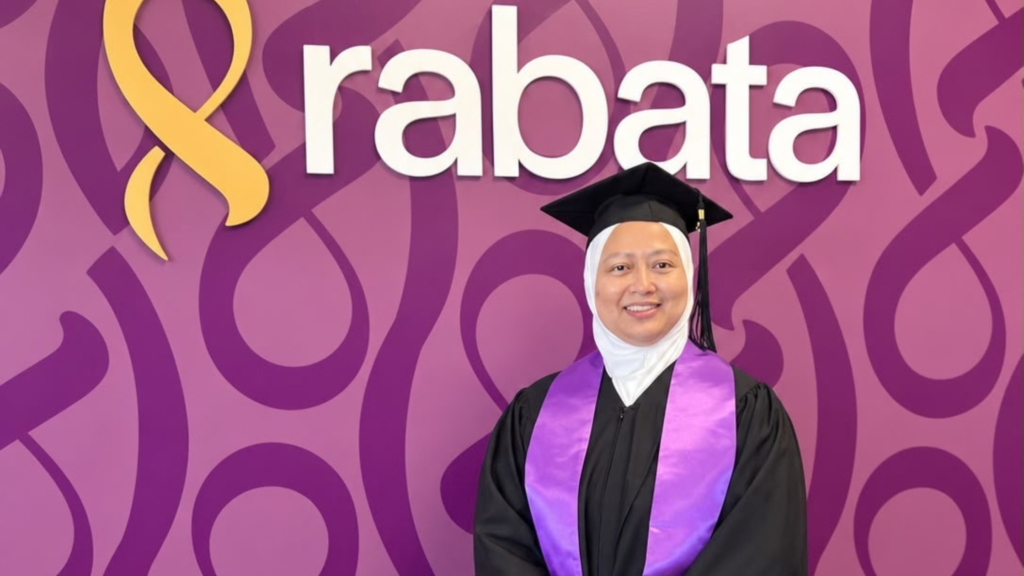
Delivered at Rabata Teacher Certification Graduation
“Before we stand before a ḥalaqa, before we open a text, before we speak, we must ask: Has this knowledge landed in me first? Has it softened something, clarified something, challenged something? A teacher who has not wrestled with the material in her own heart will struggle to place it in the hearts of others.”
Bismillāh al-Raḥmān al-Raḥīm. Alḥamdulillāhi Rabb al-ʿālamīn. Wa-l-ṣalātu wa-l-salāmu ʿalā Rasūlillāh, wa ʿalā ālihi wa ṣaḥbihi ʿajmaʿīn.
To Anse Dr. Tamara Gray, to our beloved ānisāt, to the Rabata family, and to the families and loved ones who prayed for us and over us—assalāmu alaykum wa raḥmatullāhi wa barakātuh.
I want to begin with a question that stayed with me throughout this program, and one I suspect has visited many of you as well: What, exactly, are we celebrating today?
If the answer is the completion of a curriculum, the checking of a final box, the crossing of a finish line, then today is a beautiful ending. But I do not believe that is what today is.
I believe today marks something far more weighty, far more sacred, and far more demanding. Today, we are not graduating from learning. We are graduating into responsibility. And that responsibility begins with what this knowledge asks of us before we ever share it with anyone else. First, knowledge transforms the self before it reaches others.
There is a narration, widely attributed in our tradition, that the scholar will be asked not only what they knew, but what they did with what they knew. Knowledge, in our tradition, is never merely information. It is an invitation. An invitation to transformation.
I think about the hours we spent in this program: the early mornings and late nights, the lessons revisited when life was full and difficult, the moments we returned to the text carrying questions from our own lives. We were not simply filling notebooks or notes on Google Docs. We were, in the most intimate sense, being changed. The knowledge was shaping us.
Imam al-Ghazālī reminds us that knowledge without action is like a tree without fruit—beautiful in form, but failing in its essential purpose. The purpose of sacred knowledge is not to adorn the mind, but to soften the heart, refine the character, and draw us closer to Allah ﷻ, closer to adab, and closer to sincerity.
This is why I say: The first student of every lesson we will ever teach is ourselves. Before we stand before a ḥalaqa, before we open a text, before we speak, we must ask: Has this knowledge landed in me first? Has it softened something, clarified something, challenged something? A teacher who has not wrestled with the material in her own heart will struggle to place it in the hearts of others. Everything we offer others will be built on this foundation.
Second, teaching is service, not status. There is a temptation, and I name it because I have felt it, that can come with certification. The temptation of arrival. We have worked hard. We have earned something. And there is nothing wrong with acknowledging that. But we must be careful about what we think we have earned. This certification is not a crown. It is an amāna. A sacred trust. Something placed in our hands not for our benefit alone, but for the benefit of those who will come to us. The communities who need teachers rooted in mercy. The young women searching for models of dignified learning. The sisters who may have been told, in subtle and not-so-subtle ways, that sacred knowledge is not for them.
Rabata was built to answer that lie. And we, all of us in this room, are the living answer. Rabata reminds us that this legacy did not disappear; it simply waited to be reclaimed.
Our teachers have modeled this for us. The gentleness of correction. The patience with repetition. The willingness to sit with a student’s confusion rather than rushing past it. They did not teach us by towering over us. They taught us by walking beside us. That is the tradition we inherit. And that is the tradition we are now called to carry forward with humility, mercy, and service.
And third, we are links in a sacred chain. In our tradition, the concept of sanad, the chain of transmission, is not merely scholarly convention. It is a declaration of how knowledge travels through time. Every teacher names her teacher, who names hers, a golden thread of transmission stretching back through centuries, back to our beloved Prophet Muhammad, peace be upon him.
Today, we become links in that chain.
Think for a moment about the women who carried this knowledge before us. In the classical tradition, there were thousands of female hadith scholars, women who were trusted authorities, teachers of scholars, women whose names were carried with reverence. Somewhere along the way, that story became obscured. Women’s voices were moved to the margins of Islamic education. And institutions like Rabata exist, and persist, to call that story back. To restore what was always true: Women are not guests in the house of sacred knowledge. We are among its most faithful keepers. We were carried by our teachers. We sat in their circles, absorbed their adab, and watched how they held difficult questions with grace.
Now we are called to pour into others the knowledge that we are carrying. Someone is waiting for the ḥalaqa you have not yet started. Someone needs the text you are ready to to teach. Someone’s question will find its answer through your voice. We do not teach because we have mastered everything. We teach because the chain must not be broken.