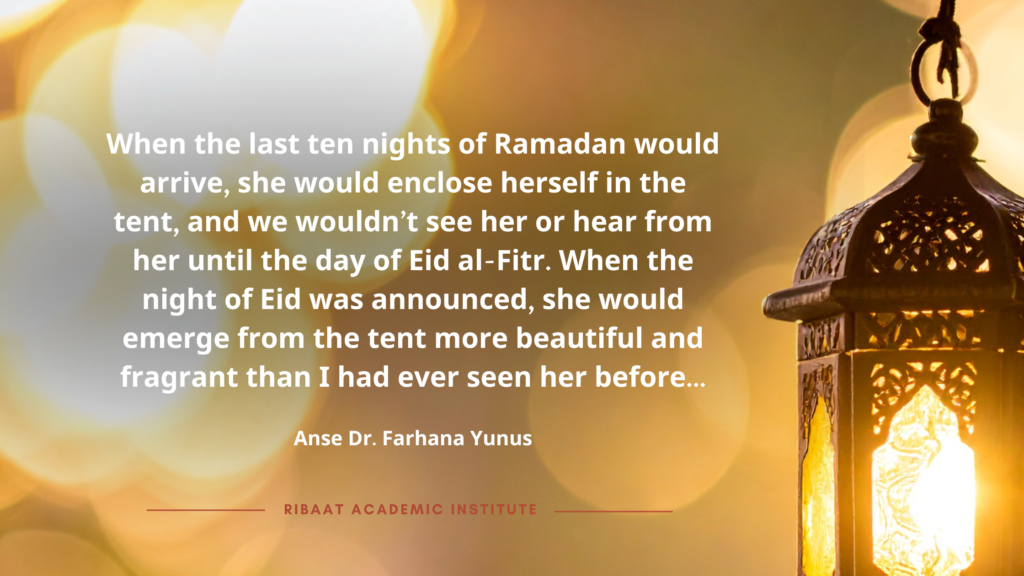
My first experience with iʿtikaf was very different from most people. My grandmother, may Allah have mercy on her, would go into iʿtikaf every year in the last ten nights of Ramadan. She would spend the first part of Ramadan sewing a cloth tent out of a beautiful, simple, delicate, breathable material. Inside, she would put a soft prayer carpet, her masbaha or dhikr beads, and mushaf (Quran). When the last ten nights of Ramadan would arrive, she would enclose herself in the tent, and we wouldn’t see her or hear from her until the day of Eid al-Fitr. When the night of Eid was announced, she would emerge from the tent more beautiful and fragrant than I had ever seen her before, and we would adorn her with necklaces of roses that we had made and give her special sweets, all the while congratulating her. Although I didn’t know what it meant at the time, I knew it was something very special, and something to be celebrated.