
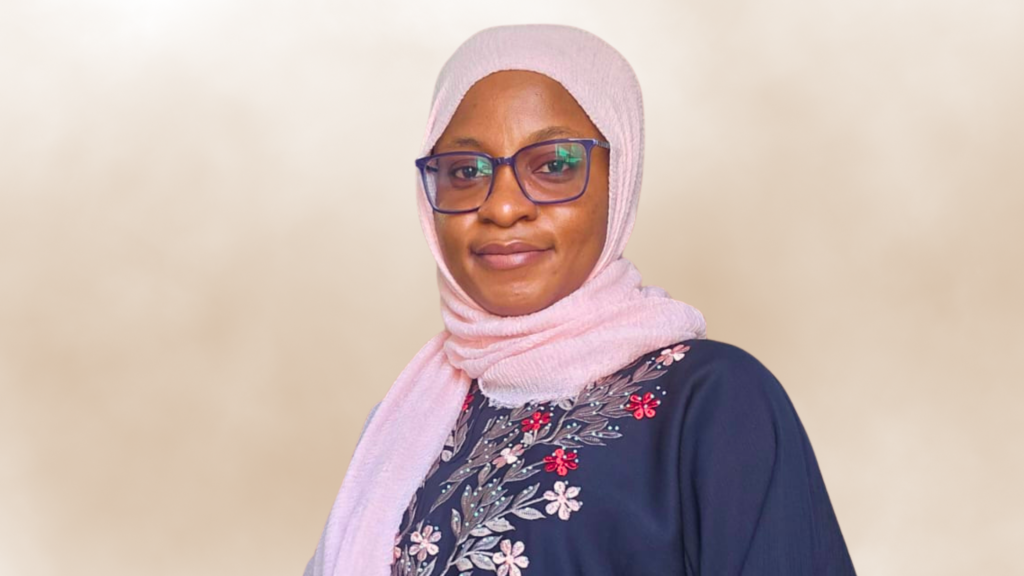
Every day, you do one thing for your akhira.
-Muneerah Machado
This month, we are reflecting on Rabīʿ al-Awwal, the excellent example of the Prophet Muhammad ﷺ, and the deep meaning of the first spring. We go through many seasons in our lives, and after every winter, every difficulty, there is a spring. This is the story of Muneerah Machado’s springs.
I had the pleasure of chatting with Muneerah for our August She Inspires. Muneerah is a wife and mother of two, with a background in supply chain, and she lives in Ontario, Canada. For fun, she loves to study the Quran, so she started a Friday ḥalaqa for her family and a Sunday Quran reflection group for her friends.
Even though she was exhausted from a long workday and a nearly two-hour commute home, she was eager to share her story to inspire others. With tired eyes, she smiled regally at me, and we began. I will let Muneerah take it from here, in her own words.
My First Spring
My journey began in 2023, when a friend invited me to join the Pilgrims at Home challenge and I first learned about Rabata. When I saw the list of ʿibāda, dhikr, and Quran reading, I said to myself, “No way. How can one person do this? Where did they get these unrealistic targets?” There were five women in our group. For the first time, I prayed salah on time, because I did not want to miss the fifteen-minute window. I was all in, scoring points for myself and my team. I even prayed extra nawāfil for more points. I was only doing 25 percent, yet I was exhausted. My husband looked at me like, why are you stressing yourself? As the challenge went on, I realized I had not been consistent, and the structure was helping my ʿibāda.
After Anse Dr. Tamara Gray announced the winners, she said something I never forgot: “Pilgrims at Home pushes us to show what we can do for points, but what is your intention going forward?” That touched me. It struck me that I was willing to push myself this hard to score points for a challenge, for the dunyā. Was I willing to push myself that hard for my akhira, knowing I will be judged by my intention? If I had made my intentions solely for the sake of Allah, that same effort would have earned me so much more for my akhira instead of my dunya. That was a light bulb moment.
Continuing to Blossom
At that pivotal moment, I decided to keep focusing on praying on time. Ten minutes before each salah, I would start announcing that it was almost time, so my family and I could pray right on the dot. We built the habit, but after a while I let distractions creep back in. Derailed again, I was not consistent.
Then I started attending qiyām at Masjid Rabata. I saw women like me, married with kids, juggling life, and still doing this deeper part of the ʿibāda. I started asking, what excuse do I have? In one of those qiyām talks, we were encouraged to pick a word for the year. I chose imān, faith.
I also joined a ḥalaqa and was in Anse Leila Pačariz’s class. She was phenomenal. She was so vulnerable with us that I felt the love of Allah and the deep bond of sisterhood. Only once before in my life had I received the guidance of a woman like that, but she passed away in 2019. Anse Leila was the only other woman scholar I connected with so personally. It felt like a gift Allah had given me. This group supported and encouraged me, and every Saturday I looked forward to that class, because it gave me direction, guidance, and a way to live my life.
That same Saturday of qiyām, Anse Leila encouraged us to choose a word too, and hers was taslīm. So I settled on two words, imān (faith) and taslīm (submission), and put them on my vision board right beside where I pray. Later in my story, I would realize how powerful those two words were together, and how they had been working in my life all along.
At this point in my life, Rabata offered a blueprint for my life, from Pilgrims at Home to qiyām to the ḥalaqa. I finally had a path instead of guesswork.
After Spring, Came the Test
I fell off again. With school, two kids, and the home, it felt like too much on my shoulders, and slowly I got distracted. And when you are distracted, you do not even notice you have stopped. You just look up one day and the good habits are gone.
December 2024 is when my life caved in. My husband’s work permit was refused over the silliest excuse, and he was out of his job for months. In January, we lost a court case. Then, on my way to work, a car accident left me injured, an injury I am still living with and still in physical therapy for. Then in March, I lost a very close friend. It kept coming, blow after blow, and I remember thinking, why is this happening to me? Is Allah punishing me?
Through each phase, I shared my struggles with Anse Leila. Over and over, she reminded me to be steadfast and to know that Allah would sort me out. At some point I thought, I am not sure you know what you are talking about.
Another friend kept telling me not to despair. I knew people were trying to encourage me, but I felt no one understood, so I started to stay away from everyone. That only made things worse. My mental and physical health were failing. I was consumed with fear. I could not sleep. My heart palpitated.
Then one day, after salah, I broke down. I cried, “Ya Allah, are you punishing me? I am so sorry. I need something from you, anything.”
I opened the Quran, and right in front of me was Sūrat Fāṭir, ayah 2: “No one can withhold the blessing God opens up for people, nor can anyone but Him release whatever He withholds: He is the Almighty, the All Wise.”
I looked up at the words on my vision board, imān and taslīm, the ones I had posted and forgotten. Suddenly I understood their power.
I knew that was it. I immediately began making istighfār, asking forgiveness for having thought the worst of Allah. I kept hearing the ḥadīth qudsī, “I am as My servant thinks of Me, and I am with him when he remembers Me.” I realized it was never Allah. It was me.
From that point, I decided to be steadfast.
A Powerful Lesson
During my trial and despair, Allah gave me the gift of the people around me. Allah is al-Raḥmān, and He gives generously, even as He tested how much I believed. Until then, I had still been focused on the rituals of ʿibāda, not the inner submission of my heart to Allah. People around me kept reminding me that Allah still loves me, that Allah is all powerful, that we may never understand why but Allah always has a reason, and Allah truly knows best.
I had to let go of the struggle. I had to understand that I had no power and no control. If I died today, none of this would matter. It was all about submitting.
My Second Spring
That test helped me take hold of my emotions, with Allah’s help. I had been losing my hair, my hormones all over the place. The moment I submitted, my body began to regulate itself.
I have gone from one extreme to the other. Now, the moment my children bring me a problem, I realize right away that I have no power over it, and I turn them back to the One who does. I ask them, “Have you asked Allah?” I feel so much peace. And that peace does not stay in me. It extends to my husband and radiates through my home like light from my heart into every corner. I see it in my family and in the people I meet. I am no longer edgy. My heart has stopped racing, and the anxiety that consumed me is gone. I no longer try to work everything out with my own hands.
I have learned that knowing we have no control and accepting we have no control are two very different things. Now I live in the moment. At the end of each day, I recount all that happened, and whether it was good or bad, I say alhamdulillah.
My trials are what carried me to acceptance.
As I close, I encourage everyone, this Rabīʿ al-Awwal, to get to know the Prophet Muhammad ﷺ for yourself. Read and love Dalaʾil al-khayrat, so that we may be among those who send blessings upon the Prophet ﷺ, and not among those who forget.
Thank you Muneerah Machado for sharing your story of trial and triumph.
Beautiful and inspiring story. May Allah always keep you and your family steadfast. Ameen!