
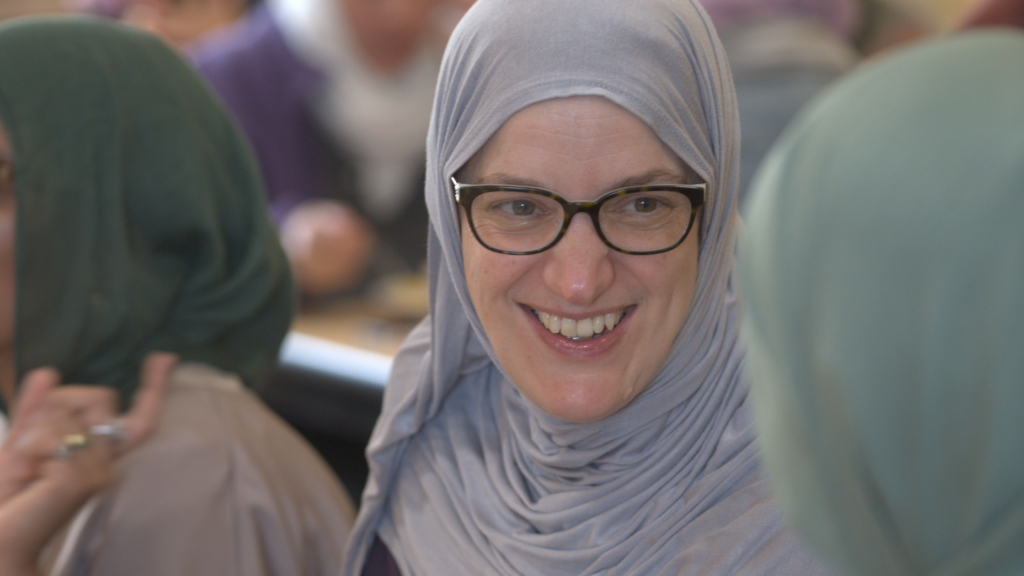
“Coming into this community has shown me—shown us—that women can be strong, independent, and deeply faithful, all at the same time.”
—Anse Elizabeth Penny
Anse Dr. Elizabeth Eman Penny converted in 2000. She resides in Birmingham, England, and has three children, ages 15, 18, and 20. She is also the sole carer of her husband, who has a physical disability. Elizabeth is a consultant clinical psychologist and works four days per week. With all that she carries, she still serves as the Affiliate Lead for the UK and helps to support Europe. She would like to thank her team for their hard work and sisterhood: Anse Amena Hakim, Anse Nishat Lal, Anse Hena Syed-Sabir, Anse Nurenisa, Anse Royala, Anse Thahirah, Anse Amaal, Anse Saskia, and Anse Maryline, along with the support of Anse Leila. For fun and recreation, she runs, gets into nature, and eats lots of cake.
On Friday, June 19, we had the lovely opportunity to meet over Zoom in the middle of her chaotic day. I was in Denver and she was in the UK. She wore a beautiful black and white geometric print scarf. I could feel the buzz and excitement she still carried after hosting Anse Tamara Gray during several events over the weekend.
What inspired you to bring Rabata to the UK, and what did that founding process look like for you?
“I have been leading Rabata UK for 18 months. It’s funny, but I had no choice in the matter—I was volun-told by Anse Tamara. I had been a core volunteer for years. We had two amazing leads, but they were very busy. Anse Nishat moved abroad and Anse Amena led the Ḥalaqāt system.
When Anse asked, ‘Are you busy?’ I replied, ‘Not for you.’ When you offer to do something sincerely, Allah makes it easy for you. Allah opens doors.
As I have become more familiar with my role, it has become strategic—translating the beautiful goals established by Rabata to be appropriate and relevant for the UK population. Strategic goals that fit our communities, which are largely a South Asian population.
Our communities are impacted by poverty and deprivation. Women are less able to attend events. There is less of a culture of independence, less support from their families, and in certain cultures, women tend to stay home. Therefore, there is a reluctance and less ability to travel—even for 30 minutes. Of course, there are exceptions. To be clear, the social and economic barriers are different here than in the US—Muslims are less well off here. That is why we are committed to creating positive cultural change.”
Editorial Note: Research bears this out: British Muslims experience some of the highest poverty rates of any religious group in the UK, a reality that shapes the kind of support communities like Rabata UK must provide.
What does the Rabata community mean to women in your area—what gap does it fill?
“It feels like coming home. Coming into this community has shown me—shown us—that women can be strong, independent, and deeply faithful, all at the same time. For many in our UK community, they have not always had that opportunity before. They love rising to the challenge. They are also so overwhelmed by the joy Rabata brings—and that is what Rabata brings: high expectations and joy.
I remember we had a retreat a couple of years ago and the women were shocked by singing nashīds in the middle of the night. Female teachers who can be so serious, intellectual, and fun, they had never seen so much joy in their faith before. The gap that is being filled is bringing joy to their faith and showing them that Islam values and appreciates women.”
What does a typical month of programming or connection look like for your chapter?
“We have online offerings. Every Thursday night we do Jummah Lights, reciting Sūrat Kahf together. There are lots of Rabata-inspired online events too, due to the time zone difference.
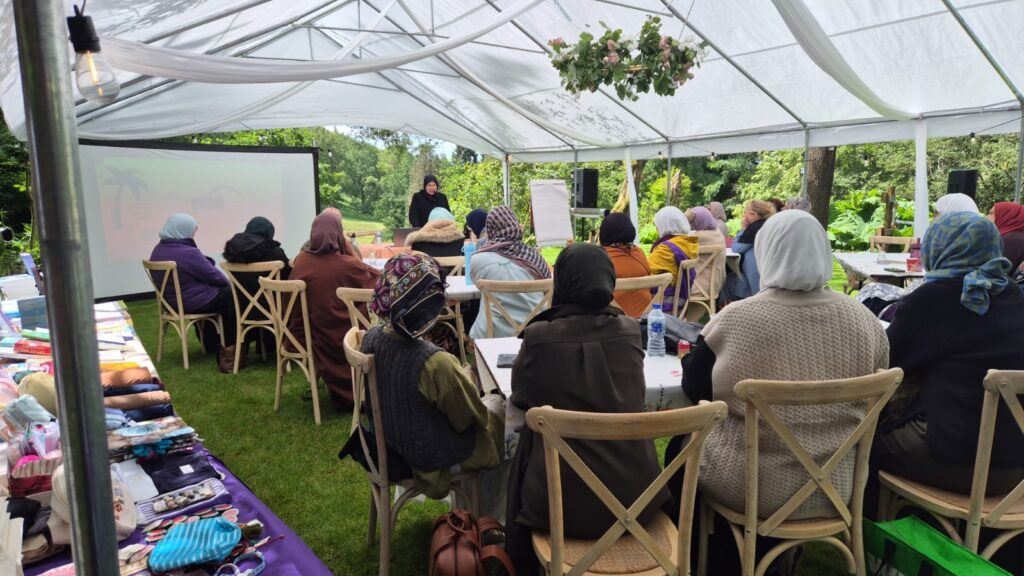
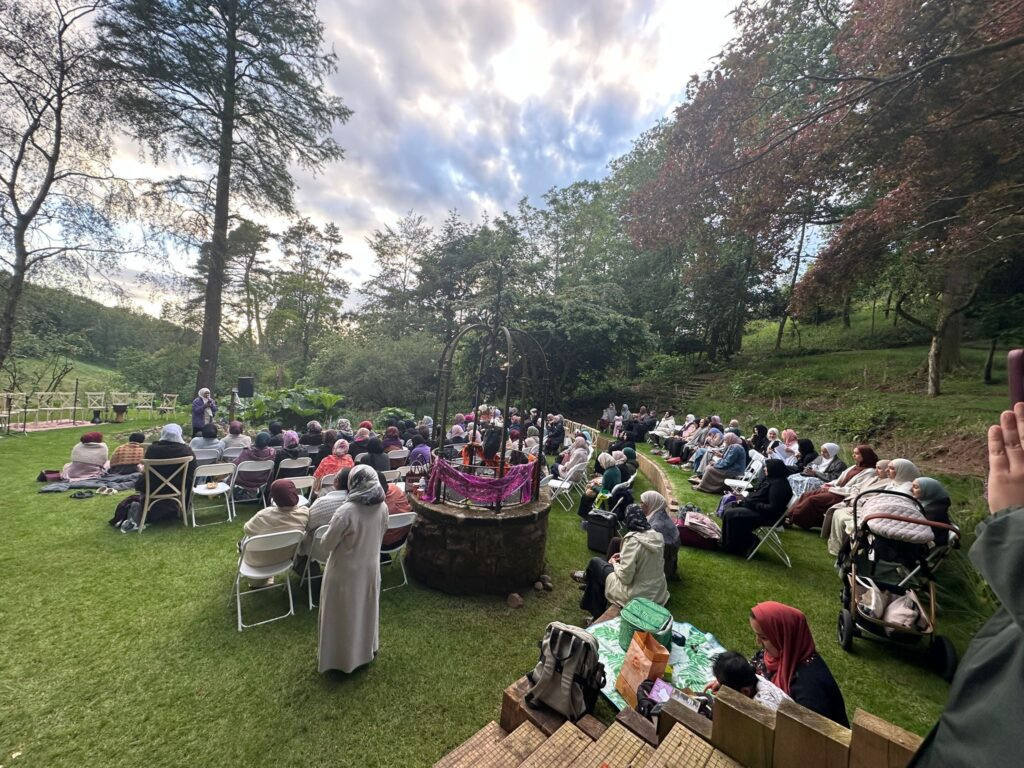
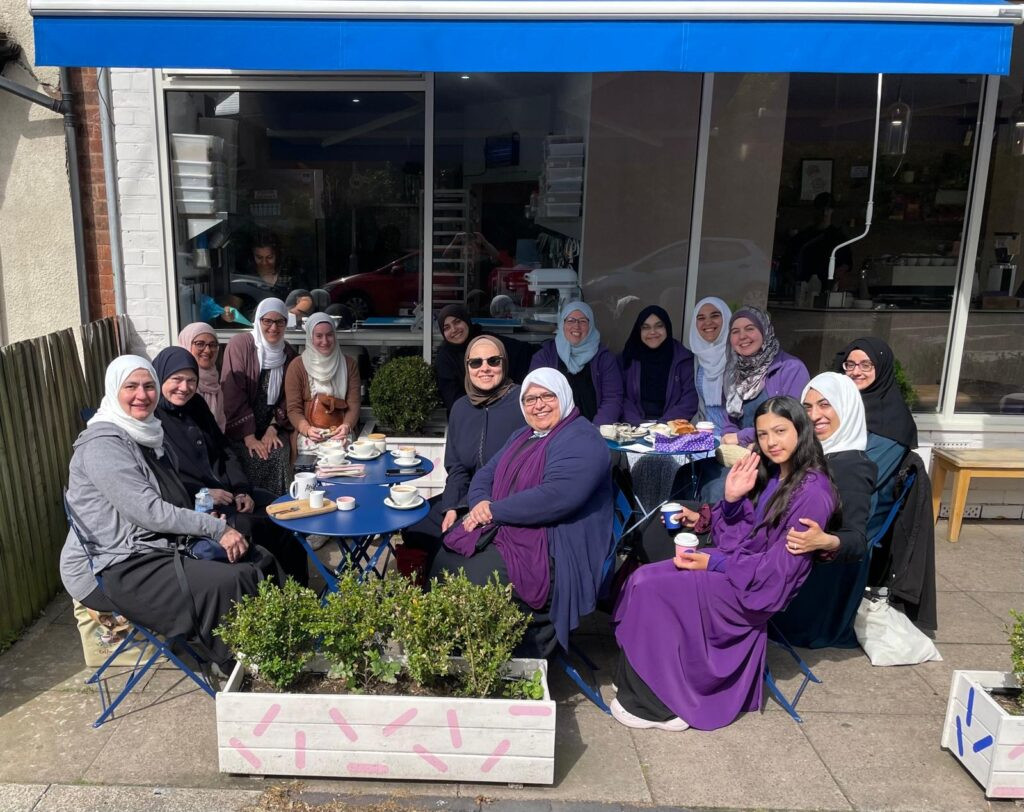
We also developed face-to-face community events based on our four regional groups: Wales, London, the North, and the Midlands. Each area has a monthly offering, things like dhikr walks, Joy Jots book clubs, coffee mornings, and gatherings in Ramadan.
We have over 550 women in our WhatsApp group now. Before, it was around 150 just a few years ago. Our volunteer base is growing too. There are such real blessings in volunteering. People come with different levels of interest and engagement, and that’s beautiful.
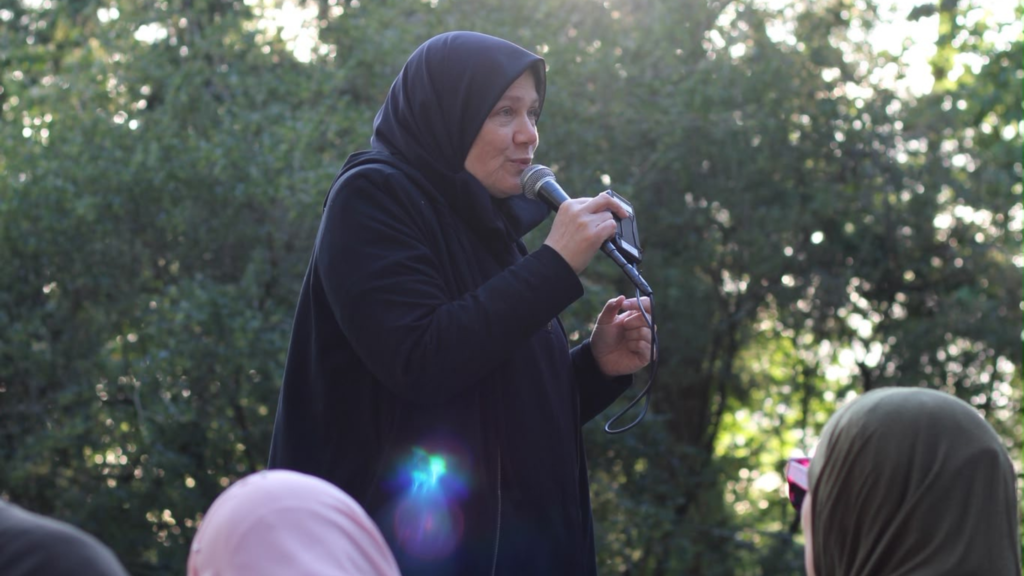
This year, when Anse Tamara came, we planned five ticketed events over the weekend, a bit more expensive, and they sold out. Over 500 tickets were sold. People traveled from all over the UK and Europe. There was also a Project Lina event centered on converts, called Voices and Verses, focused on the Quran and nashīds.”
How has leading this chapter shaped your own growth as a Muslim woman and leader?
“It has been an incredible journey for me. Saying yes to this expanded my time. Allah gives you that space. It brings so many blessings to volunteer in this way. It has been such an honor to host Anse Tamara and create events for her. It’s a benefit for all the ladies.
I love seeing the growth. I suppose it has shown me what I am capable of, because I was so worried I wouldn’t be able to do it. It has grown my leadership skills and confidence. And spiritually, it is a source of opening, having a position of leadership makes me feel that I must lead by example. My spiritual practice has increased, which is a beautiful opening. It is a very serious thing to be a leader.”
What has surprised you most about building community in your local context?
“I am surprised by the quiet love and passion that has been hiding in our communities. There are women who are real lovers of Allah and truly sincere seekers, but they have never had the chance to shine or to meet female teachers like Anse Tamara. Meeting Anse Tamara and joining ḥalaqāt and Pilgrims at Home (PAH)—it is all so inspiring. And the power of sisterhood in our core team, women of different ages, regions, and cultural backgrounds.”
How do you hold space for differences and belonging?
“I love differences. When we acknowledge differences, we honor the magnitude of Allah’s creation. Differences only become problematic when we try to pretend they don’t exist, or when we are too fixed on there being only one right answer, when we narrow our perspective on what is right.
So we celebrate differences. In our communities, Eid is often divided, which causes pain for people. We reframe it: It is all good as long as you follow your community. Ultimately, your Eid is with Allah. We stay positive and remember that our differences are small compared to the beauty of Allah’s diverse creation.
We try to practice radical hospitality, as modeled by Rabata by being very welcoming and respectful of everyone, assessing what cultural and access needs people have, and always coming with the best of manners.”
Can you share a moment or story where you witnessed real transformation in a woman through this community?
“I actually have two stories. The first is about a woman who is not a native Arabic speaker but heard about the Baqara program and decided to read Sūrat al-Baqara daily. She recently completed a full year. We celebrated her at an event with a crown. Being able to do that as a working mom inspired many of us who often make excuses.
The second story is about one of my ḥalaqa students who reached out and said she wanted to come to the Birmingham event with Anse Tamara. She had never traveled on her own before, but she wanted to attend. She was anxious about traveling and entering a room filled with strangers. Despite that, she bought her ticket without any certainty that she would come. In the end, she came and now has a picture with Anse Tamara. That short 45 minutes down the motorway was life-changing.”
What would you say to a Muslim woman in the UK who hasn’t found her community yet?
“I would say Rabata UK is your community. We welcome women from all social backgrounds—women who are converts and women who were born into Islam, women who are winning Pilgrims at Home (PAH) and women who are not yet praying. Rabata UK welcomes them, creates a space where they feel safe, and encourages them to find their better selves.”
What is your vision for the chapter—where do you hope to see it in the next few years?
“I hope that we will continue to be a space that is open, safe, and encouraging for everyone. I hope each regional area will have support so that volunteers and participants can flourish and become leaders themselves. I hope that we continue developing UK-wide events for practicing Muslims and for women returning to Islam.”
Thank you so much for being a quiet force for positive cultural change, Anse Elizabeth. Your story of the impact of Rabata UK on so many women has inspired me, as it will inspire others.